

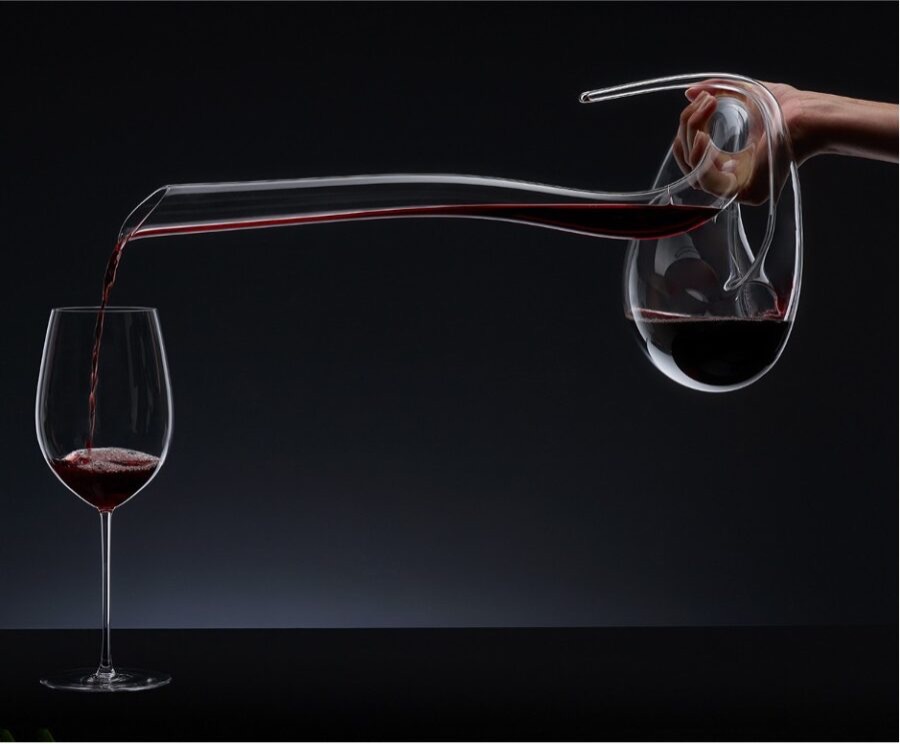

Ask most people what makes a great glass of wine and they’ll talk about the vineyard, the vintage, the winemaker’s influence. Few think about the vessel it’s poured in. Yet the glass sitting on your table is doing more work than you’d expect – directing aroma, shaping texture, even deciding which flavours reach your tongue first. Get it right, and a good wine tastes better. Get it wrong, and even a great bottle can fall flat.
Every wine glass is built from three components. The bowl shapes how the wine breathes and how tightly or loosely its aromas concentrate – broad for reds that need air, narrower for whites that need to hold their nerve. The rim decides how the wine actually meets your mouth; a fine, thin edge lets it flow onto the palate almost unnoticed, while a thick one gets in its own way. And the stem, often dismissed as pure aesthetics, has a hard job of its own: keeping the heat of your hand well away from the bowl, so a chilled white stays chilled. Then there’s the crystal question. Crystal’s thinner, roughened surface lets wine breathe more readily as it’s swirled, drawing out extra aroma, and modern lead-free formulations have shed the weight and fragility that once made it impractical. Standard glass remains sturdier and better suited to everyday use.
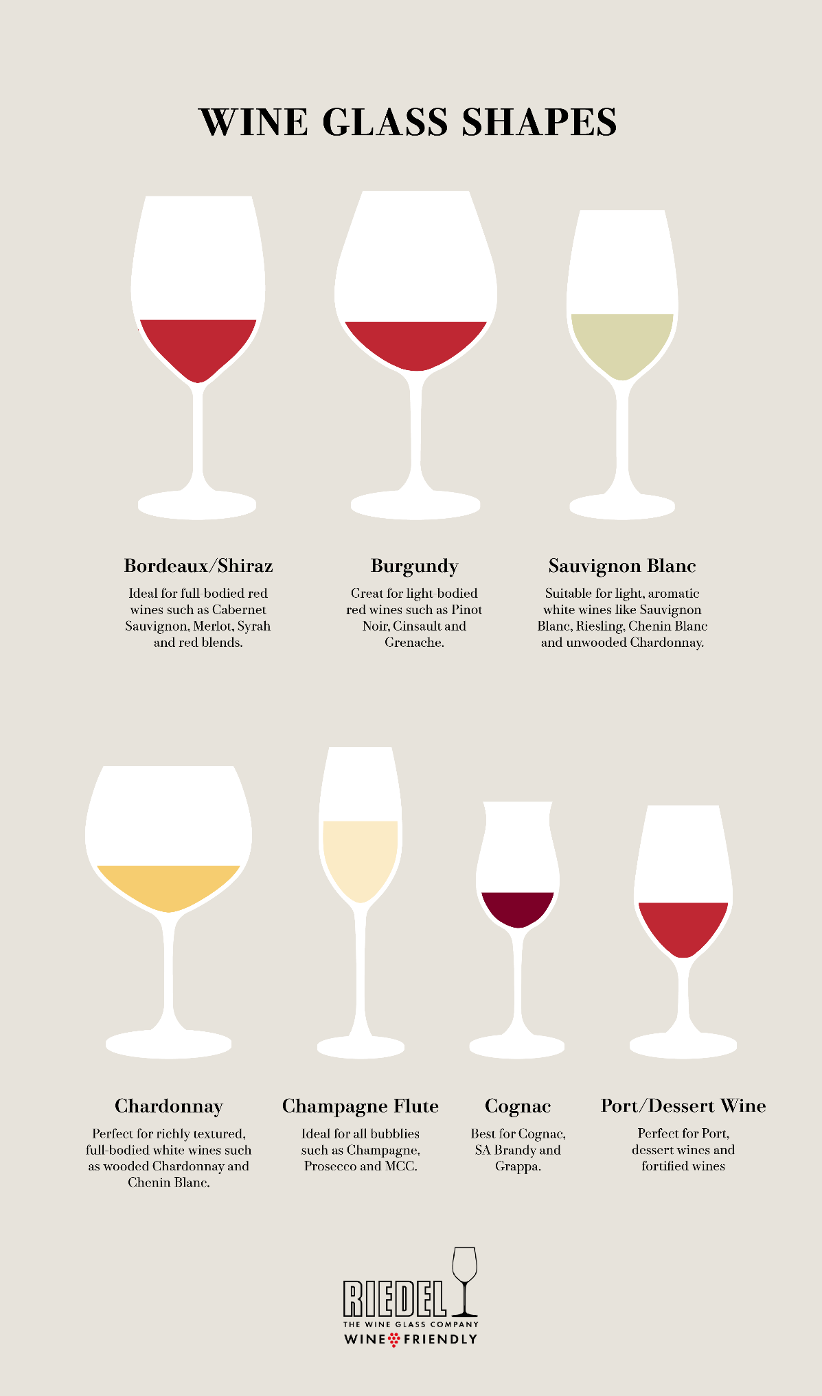
However, it’s the shape of your glass where things get genuinely clever. A narrower rim steers wine to the middle of the tongue, favouring sweetness and fruit; a wider one sends it to the sides, where acidity and tannin register more sharply. That’s why a structured Cabernet Sauvignon wants a tall glass with a broad bowl, funnelling wine toward the back of the palate to soften its grip, while Pinot Noir, all perfume and finesse, wants the widest bowl possible, maximising the surface area for its aromatics to unfurl. Whites do better in narrower glasses that concentrate their brighter notes and keep them cool for longer. Pour the same wine into the wrong shape and you’re not imagining the difference… you’re tasting the consequence of geometry.
Nobody has taken that idea further than Riedel. Founded in Austria in 1756 and now run by its eleventh generation, the family turned wine glassware on its head in 1958 with the world’s first grape-varietal-specific stemware. It was a strange idea at the time: that a glass could be engineered as precisely as the wine it holds. Nearly seventy years on, it’s simply how serious wine drinking is done. “Our glasses are to wine as loudspeakers are to music,” said Georg Riedel.
At Belthazar, we think every part of the table should work in the wine’s favour, glass included. That’s why we take great pride in ensuring we have the perfect Riedel glass to match your wine choice. So next time your glass arrives at the table, give it a proper look before you drink. Notice the sweep of the bowl, the fineness of the rim, the way it seems built with your wine specifically in mind. Because, in a sense, it was.
29 August 2026
