

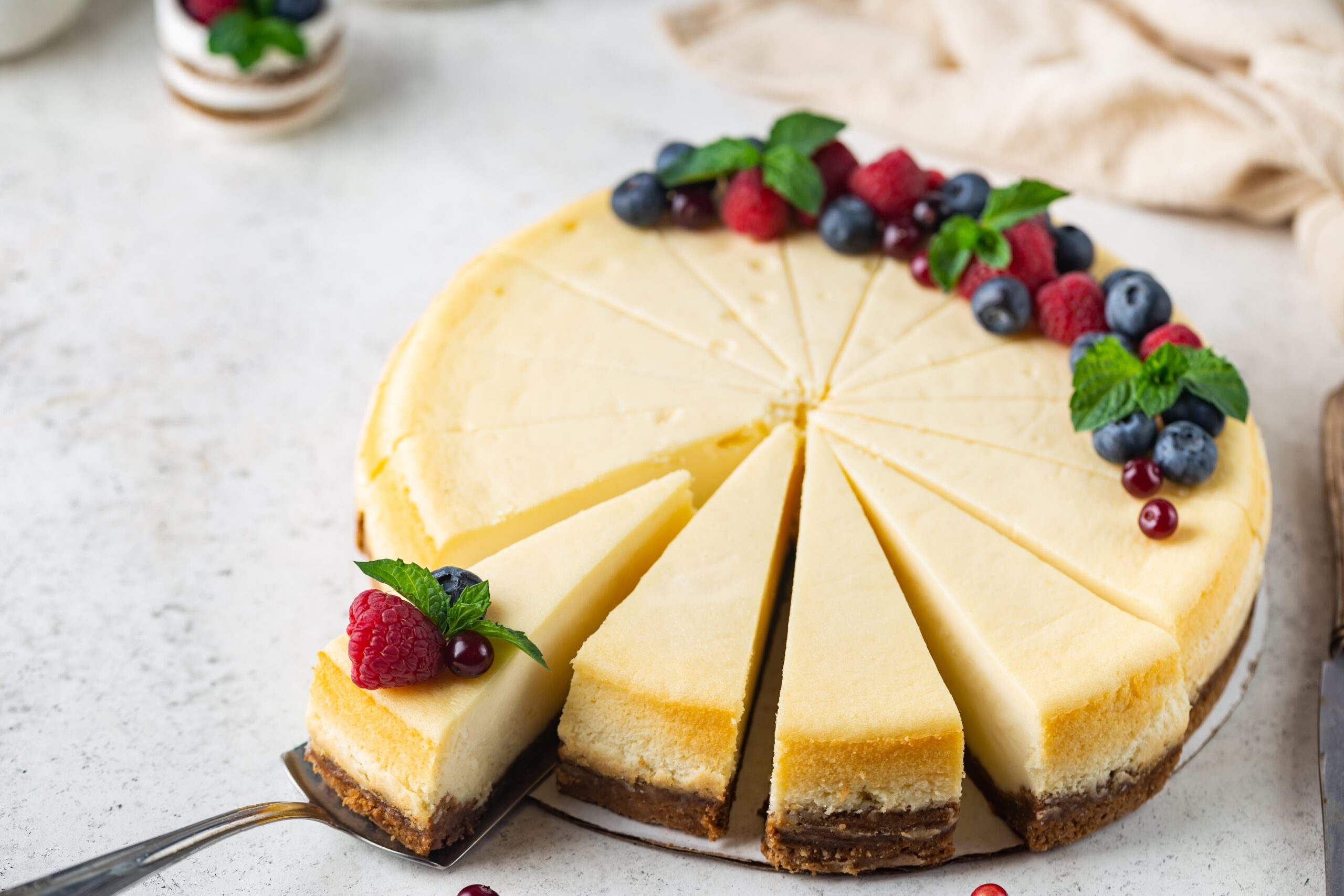

Ask most people where cheesecake comes from and they’ll say New York, maybe Philadelphia. Fair guess… but no. Long before cream cheese, before diners, before anyone had heard of Brooklyn, cheesecake was already being served on a small Greek island, and it had nothing to do with dessert menus. It was fuel.
Archaeologists have found cheese moulds on the island of Samos dating back roughly 4,000 years, evidence that cheese making there predates written history. By the fifth century BC, the Greeks were combining fresh cheese with honey and wheat flour, pounding it smooth and baking it on an earthenware griddle. It wasn’t decadence – it was considered restorative, dense in energy, and reportedly handed to athletes at the first Olympic Games in 776 BC. Brides baked it for their husbands’ families as a gesture of hospitality, a tradition with an odd echo in the wedding cakes of today.
When Rome absorbed Greece in the second century BC, cheesecake went with it. Roman cooks adjusted the method, folding in eggs and baking the mixture beneath a hot brick rather than over a fire, turning what had been a flatbread-adjacent snack into something closer to a cake. As the empire expanded, so did the recipe, carried into Britain, Gaul and beyond.
England gave cheesecake its first literary credit. The 1390 manuscript Forme of Cury, compiled for the kitchens of Richard II, includes a recipe called sambocade: strained curds, sugar, egg whites and elderflower, baked inside a pastry shell. It’s here that the dish starts to resemble what we’d recognise today: a filling set inside a crust, rather than a densely baked loaf. Sugar, still a luxury at the time, marked it out as food for the wealthy.
The cheesecake of today didn’t arrive until 1872, and it arrived by accident. A New York dairyman named William Lawrence was trying to recreate Neufchâtel, the soft French cheese, and ended up with something richer and creamier instead. He called it cream cheese. Within a few decades, it had a brand name, Philadelphia, despite having no real connection to the city, and a new category of cheesecake was born.
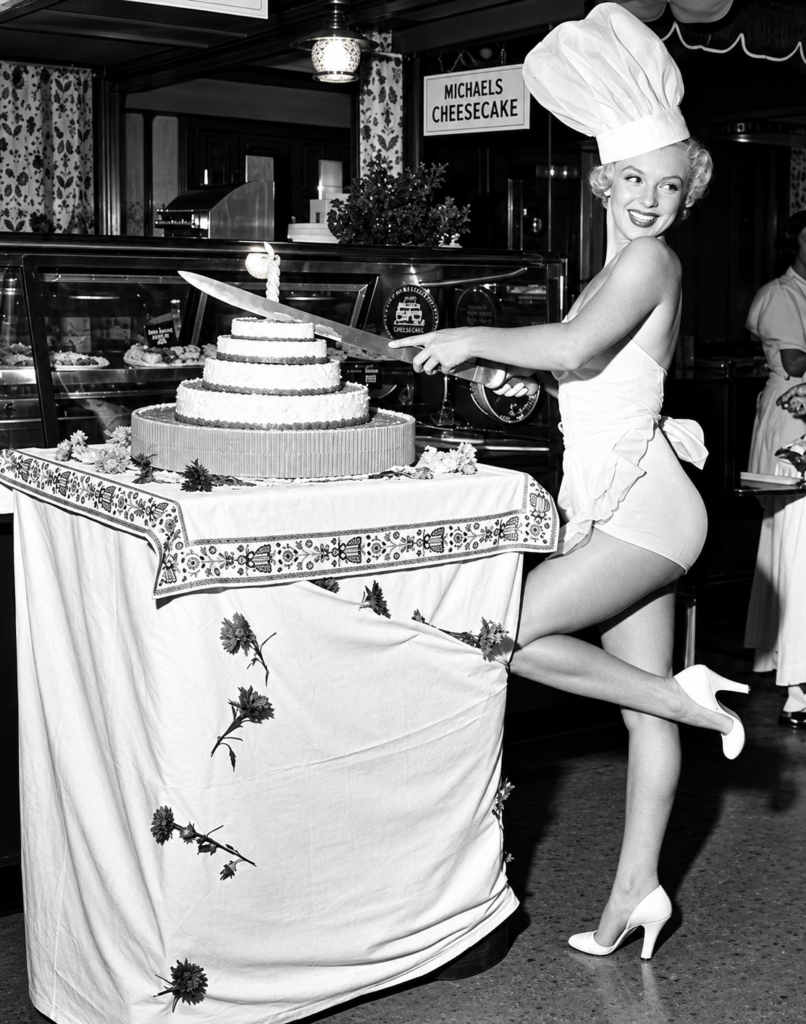
New York took the credit from there. Restaurateur Arnold Reuben is widely credited with refining the dense, cream-cheese-based style in the 1920s, and by mid-century it was a fixture of New York delis and fine dining alike. Elsewhere, the dessert kept mutating: Italy leaned on ricotta, Germany on quark, Japan eventually reinvented it as a soufflé-light, barely-sweet version, and the Basque Country took to burning the top on purpose and calling it a feature.
Four thousand years in the making, and it’s still worth the trip to the V&A Waterfront. Join us at Belthazar and taste a dessert with more history than most main courses.
30 September 2026
